TradingKey - On September 16 ET, data from the U.S. Census Bureau showed that August retail and food services sales grew 1.2% month-over-month, exceeding the 0.7% forecast in a FactSet survey and marking the largest month-over-month gain since March 2026; sales were up 6.0% year-over-year. The July month-over-month decline was revised from 0.6% to 0.5%.
Twelve of the 13 major categories posted month-over-month growth. Gas station sales rose 3.1%, non-store retailers gained 2.6%, electronics and appliance stores grew 1.6%, and food services climbed 1.2%; building material and garden equipment stores fell 0.2%, standing as the only major category to record a decline.
Excluding autos and gasoline, retail sales increased by 1.2%. Control group sales—which exclude automobiles, gasoline, building materials, and food services—rose 1.4%, beating the 0.5% expectation in the FactSet survey. The control group data serves as a key input for calculating goods consumption in U.S. GDP, indicating that retail spending maintained momentum after stripping out volatile categories.
Retail sales figures are reported in nominal terms and are not adjusted for price changes. A 3.9% month-over-month rise in U.S. gasoline prices in August was a major contributor to the growth in gas station sales. Meanwhile, concurrent gains in non-store retail, electronics, and food services indicate that the sales rebound was not confined to the energy sector.
Why Didn't Retail Data Boost Rate Hike Probability?
According to CME data, the probability of a 25-basis-point rate hike by the Fed in September remained around 93% both before and after the release of the retail sales report. Following the release of the August CPI, the market had largely priced in this rate hike, and the better-than-expected retail sales figures did not further alter short-term rate pricing.
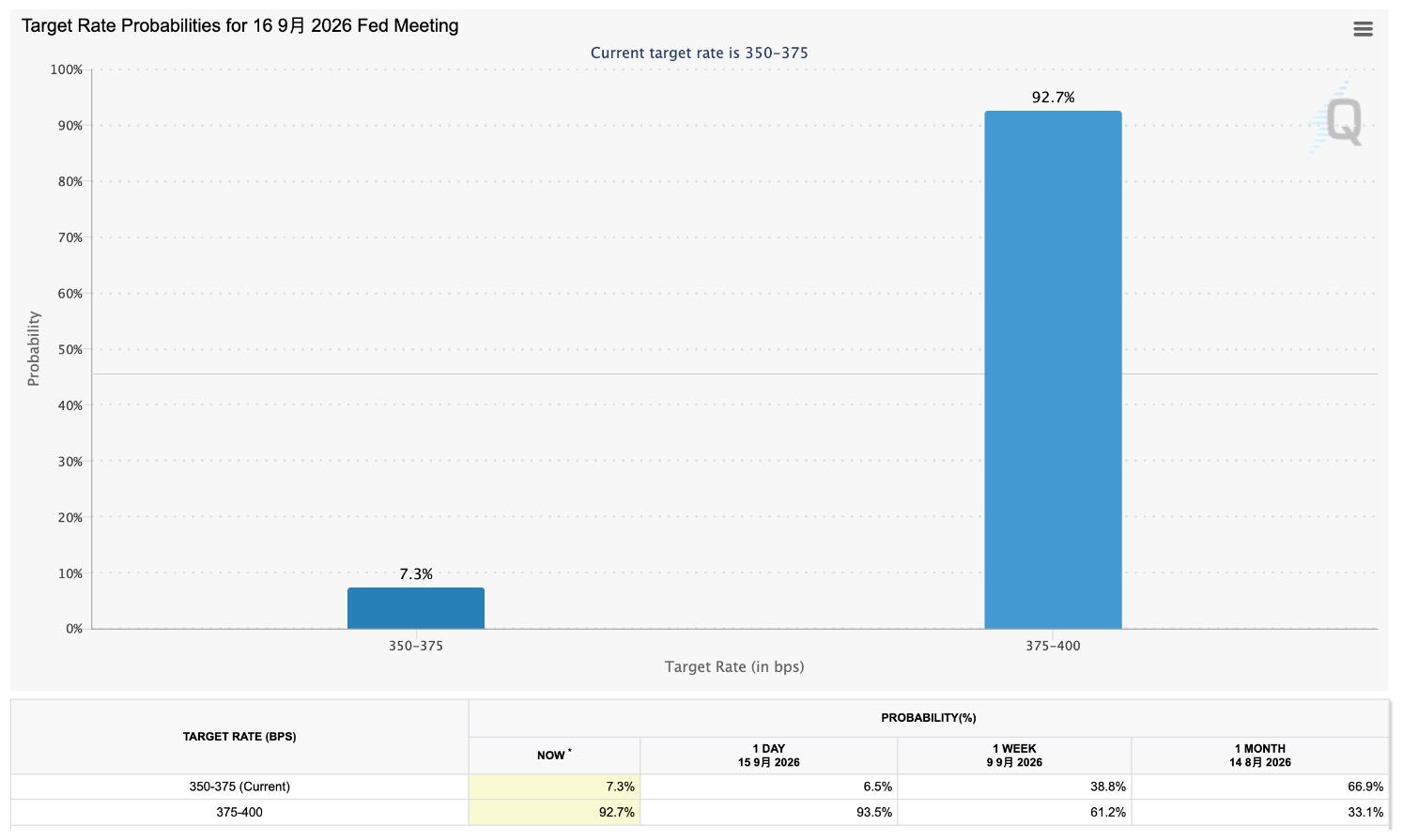
[Source: CME]
U.S. import prices rose 0.7% month-over-month in August, while export prices rose 0.6%, both released simultaneously with the retail sales data. Following the release, U.S. Treasury yields extended their decline. As of press time, the 10-year Treasury yield was down 3.1 basis points to 4.975%. The bond market did not experience a significant sell-off despite the strong consumer and import-export price data.
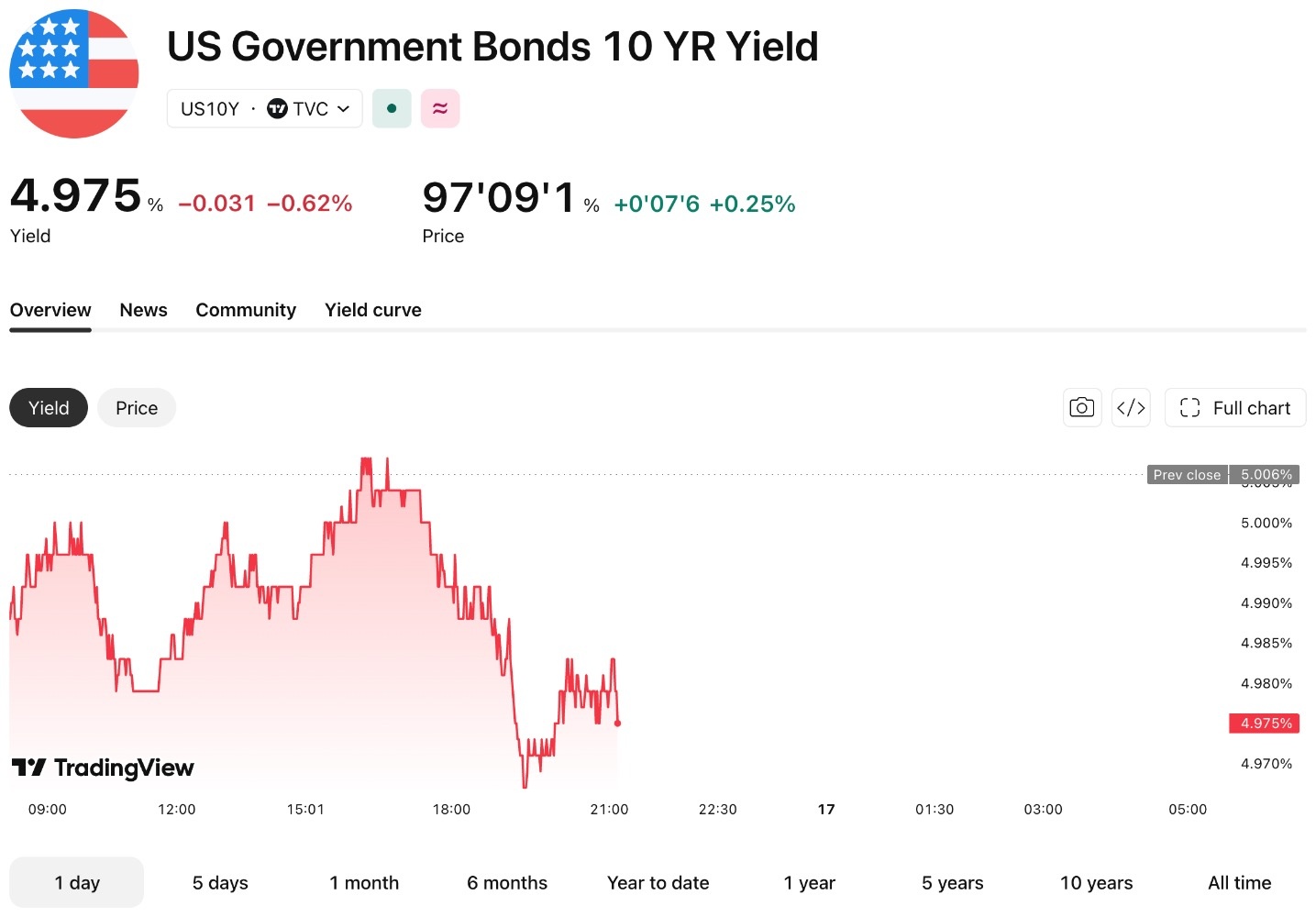
[Source: TradingView]
August retail sales showed that nominal consumer spending remains resilient, offering further economic support for Fed tightening. However, with this rate hike already the baseline market expectation, trading focus has shifted to the latest dot plot, the policy statement, and the Fed's messaging regarding subsequent rate hikes.
What Is Affecting US Stocks and Gold?
US August retail sales beat expectations, easing market concerns over a rapid cooling in goods consumption. Growth in non-store retail, electronics, and food services provided some support for revenue expectations of relevant companies. Meanwhile, sustained high interest rates will increase financing costs and put pressure on companies with higher valuations or heavy debt loads.
US stock futures rose on the day. As of press time, S&P 500 index futures and Nasdaq 100 index futures were once up about 0.23% and 0.41%, respectively. However, this movement was also influenced by falling oil prices, the approaching Federal Reserve meeting, and capital inflows following market declines in the previous trading session.
New York gold futures rose up to 0.8% to $4,366.40 per ounce. Following the release of the retail data, the 10-year US Treasury yield extended its decline. The retreat in US Treasury yields reduced the relative cost of holding non-yielding gold, providing support for gold prices.
The retail sales report showed that nominal US retail spending remains resilient, but it did not alter interest rate pricing for this Fed meeting. The subsequent trajectory of US stocks, US Treasuries, and gold will primarily depend on the dot plot, future rate hike guidance, the US dollar, and changes in real yields.
Find out more